Unexpected Inspiration from the Summer Civic Summit
By Lisa Alpert, PLTI-KC Communications
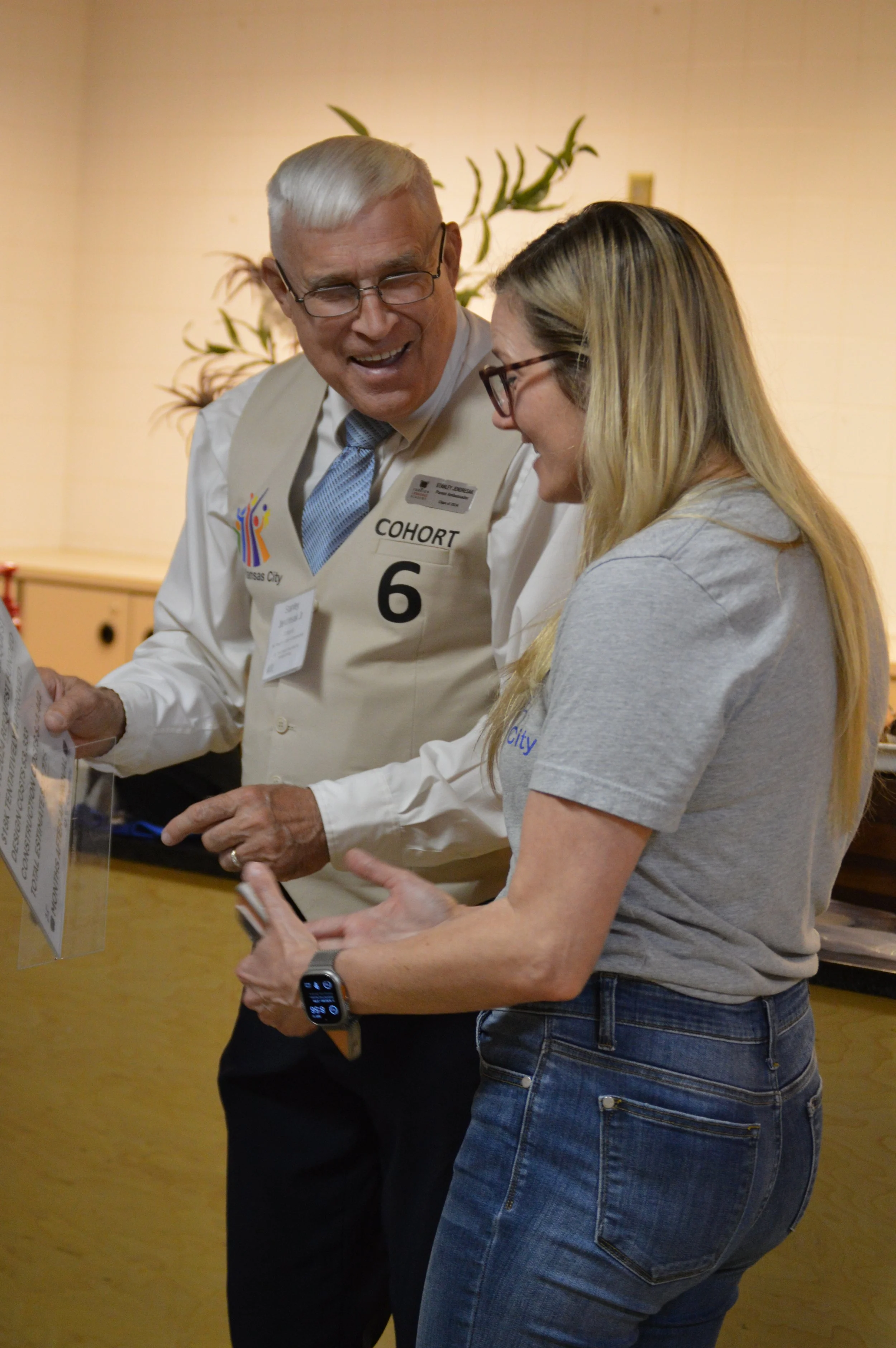
One of my favorite moments from this year's PLTI-KC Summer Civic Summit didn't happen during a workshop. It happened in between.
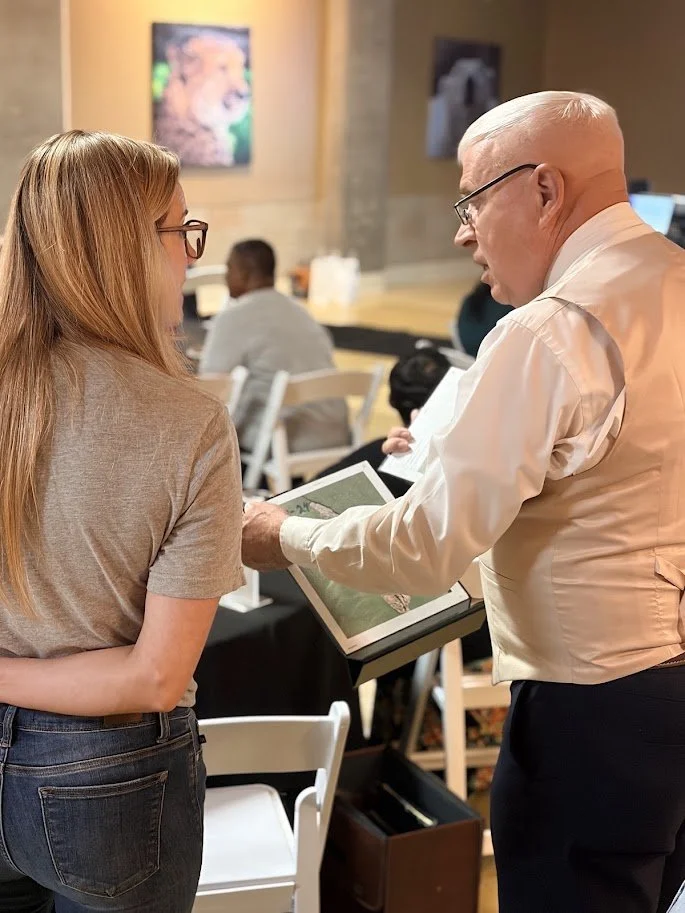
I noticed parent leader Stanley Jendresak talking with Julie, eagerly sharing photos and updates on a project he's been working on for years at Foreign Language Academy. He wasn't talking about a major policy victory or a headline-making initiative. He was talking about dog waste bins, tree maintenance, and the long, often frustrating process of making a school campus just a little better than he found it.
If you didn't know Stanley, you might have wondered why he was so passionate about something that seemed so...ordinary. But that's the thing about civic leadership. It usually looks ordinary. It looks like noticing that something isn't working and deciding not to walk past it. It looks like making phone calls that aren't returned, submitting requests that sit untouched for months, showing up to meetings year after year, and refusing to let "that's just the way it is" be the final answer.
Stanley's project has taken years of persistence, countless conversations, and more than 1,600 volunteer hours. Time he could have spent doing anything else, but he did it because he believed his community deserved better.
As I watched him talk about his project, I realized I was seeing exactly what the Summer Civic Summit is all about. People often think civic leadership begins with standing at a podium or speaking before elected officials. Sometimes it does. But more often, it begins much earlier, with someone deciding to care enough to act.
Throughout the day, I heard story after story like Stanley's. Parents talked about neighborhood block parties that brought families together. Others shared community projects they had launched, partnerships they had built, and new ideas they were excited to pursue. None of the conversations were about becoming "leaders." They were about making life a little better for the people around them.
That's what made this year's workshops feel so connected, even though they explored different topics.
Kayci Weimer reminded us that thriving communities are built by recognizing strengths, creating belonging, and investing in positive experiences. Instead of asking, "What's wrong?" she challenged us to ask, "What's strong?" It was a powerful reminder that lasting change begins by building on the assets that already exist in our families and neighborhoods.
Denesha Snell invited participants to better understand themselves through the DeBruce Foundation’s Agilities framework, helping each person recognize the unique strengths they already bring to their work and how your own gifts can serve your community.
Annie Watson and Samantha Mungai-Bashaw challenged us to think about advocacy in a time when conversations can quickly become polarized. Their session was about building trust, communicating across differences, and leading with both courage and curiosity.
Finally, Monique Shurray reminded us that every leader has a story worth telling. Whether we're speaking at a community meeting, advocating for our children, or simply talking with a neighbor, our experiences have the power to connect, inspire, and move others to action.
As I reflected on the day, I realized each workshop was developing a different part of the same leader. One focused on hope. Another on self-awareness. Another on communication. Another on storytelling. Together, they were helping civic leaders continue to grow.
Because that's the thing about Summer Civic Summit. No one had to be there.
These are PLTI-KC graduates. They have already completed the program. They aren't earning another certificate or checking a box. They chose to spend a Saturday together because leadership is something you practice.
And perhaps that's why my favorite memory of the day wasn't a keynote moment or a perfectly delivered presentation.
It was Stanley, enthusiastically showing pictures of dog waste bins. Because to him, they weren't really dog waste bins. They were evidence that one person can see a need, stay committed through setbacks, and slowly, patiently help make a community better.
That's civic leadership.