

By Lisa Alpert
I left The Literacy Table Saturday with one moment I can’t stop thinking about.
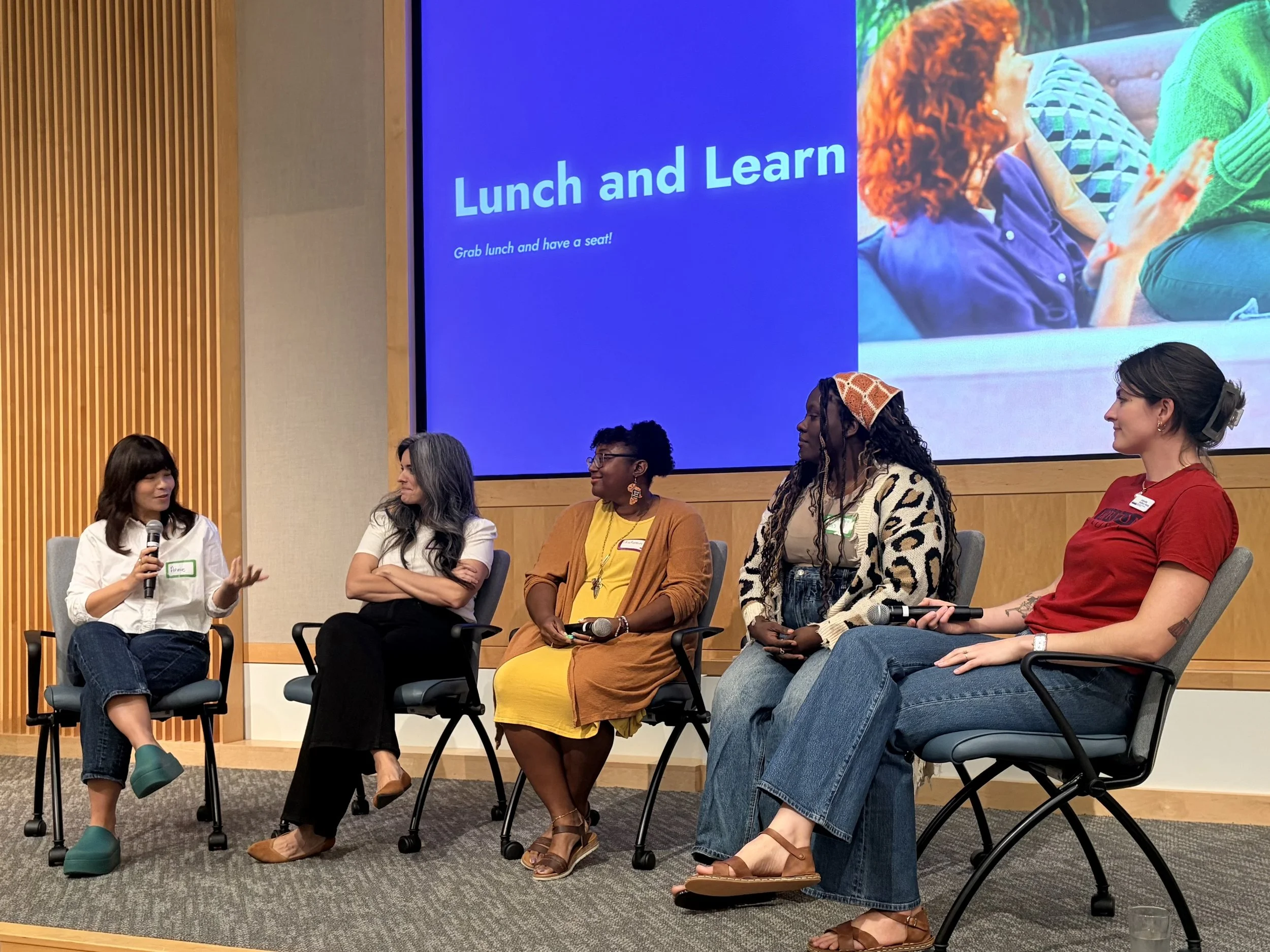
It happened during a Lunch and Learn fishbowl conversation between parents and educators. The parents had been talking about the beginning of the school year, how they introduce themselves to teachers, what they want teachers to understand about their children, and how they try to establish those relationships from the start.
One of our educator panelists, Gabi Guillory Welsh from Horizon Academy, noticed something. Listening to the parents talk, she said she kept hearing the same underlying message:
“I need you to understand how much I care about my kid.”
And then she told them that teachers feel that way, too.
She asked, “How can I help you know how much I care about your kid?”
The room shifted. Because for all the conversations we have about curriculum and phonics and reading scores and interventions and dyslexia and instructional materials, there was something incredibly clarifying about hearing this.
Parents want teachers to know: This child is everything to me.
Teachers want parents to know: Your child matters to me, too.
And maybe there is a lot we can build from there.
A year in the making
About a year ago, Julie came into a meeting with me the morning after attending a community event hosted by The Beacon about dyslexia and literacy.
She was fired up. She had questions. Lots of them.
She wanted to understand what parents were experiencing, what they weren’t being told, what they needed to know about how children learn to read—and what PLTI could do about it.
Over the following year, PLTI listened to parents. We learned alongside partners. The conversation grew beyond dyslexia into something bigger: What if we gave more families the information they need to understand strong literacy instruction—not so they can become literacy experts, but so they know which questions to ask?
Parents told us they wanted that. So, in partnership with SchoolSmartKC and TNTP, we built something.
Which brings me to Saturday.
89 people registered for The Literacy Table.
And then, in what perhaps should have been a foreseeable consequence of scheduling a Saturday morning conference immediately following the first week of school, considerably fewer than 89 people actually walked through the doors.
Around 35 of us ultimately gathered around the tables. Parents asked questions. Educators listened. People talked to one another instead of being talked at.
What if we just ate dinner together?
During the fishbowl, the conversation turned toward what stronger relationships between families and educators could actually look like.
And one of the ideas that emerged was almost comically simple:
Dinner. Not another presentation. Not another parent portal. Not another handout sent home in a backpack. A teacher sitting around a family-style dinner table with students and their families and getting to know one another.
Who is this kid? Who are the people who love them? What might change if we knew each other before there was a problem to solve?
For a day devoted to something as complicated as improving literacy outcomes across an entire city, I loved that we ended up talking about something so fundamentally human.
Relationships. And maybe 35 is enough to start.
I’m thinking about the empty chairs on Saturday. But that’s not what I’m carrying home.
I’m thinking about the parent who now knows what the Big Five are and can walk into a parent-teacher conference and ask better questions.
I’m thinking about the educator who heard directly from parents about what makes them feel respected, welcomed and valued as partners.
I’m thinking about the people who will tell another parent what they learned today.
Because one informed parent rarely stays one informed parent. They text the group chat. They tell another parent at pickup. They ask a question at the PTA meeting. They tell another parent, Hey, you should know this.
And suddenly information that lived in a conference room on a Saturday morning starts traveling.
That’s the ripple effect of parent leadership.
At The Literacy Table, parents and educators sat around them together. And if what comes next is more informed parents, more confident questions, stronger relationships between families and schools—and maybe even a few dinners together—then I think something pretty important started in that room.
Even if we had a few extra chairs.
