

A conversation with PLTI-KC facilitators Annie and PaKou about parent leadership, friendship, and the people we become along the way
By Lisa Alpert
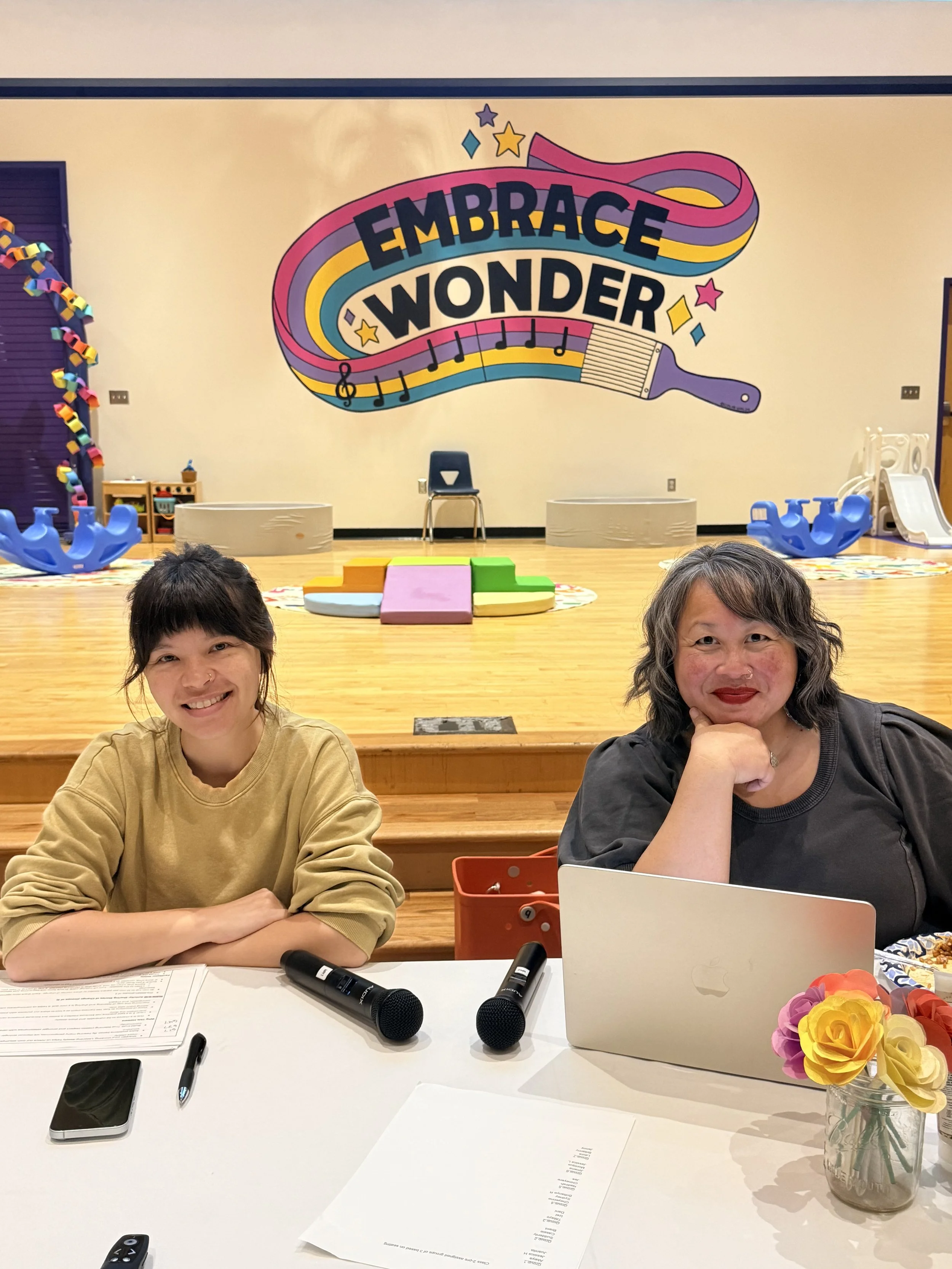
I had the privilege of sitting down over Google Meet with PLTI-KC Phase 1 Facilitators Annie Watson and PaKou Her for a conversation about their journey in parent leadership. Behind Annie, an entire family's vision boards hung on the wall. Not just her own, but everyone's. This display of collective dreams, ambitions, and imagined futures provided the backdrop for our conversation, which seemed particularly fitting.
For years, Annie and PaKou have helped parent leaders imagine possibilities for themselves and their communities that they might not have considered before. They've watched people arrive with big ideas, skepticism, determination, and sometimes uncertainty about what they've signed up for. They've watched those same people begin to recognize their own capacity to make change.
But as I discovered during our conversation, the transformations haven't been limited to the parents.
Annie and PaKou have been part of PLTI-KC's story since its earliest days. Their paths through the program haven't always been identical, but for approximately five years, they've facilitated together, developing a partnership built on friendship, mutual admiration, and an apparently relentless commitment to improving even the smallest details of the experience.
What began as a conversation about the parents they've encountered became something more personal: a reflection on the ways we recognize leadership in others, the things we sometimes struggle to recognize in ourselves, and what happens when two people give each other room to grow.
Our conversation has been edited for length and clarity.
Lisa: If the PLTI walls could talk—the walls where you've facilitated for years—what's the first story they would tell?
Annie: There's something meaningful in that question because we've now been facilitating in the same physical environment for several years. I think there's something about the memory of a place that's retained when we add new cohorts of people. There's history within the place that the cohort members aren't necessarily aware of.
I think the existing walls might tell a story about commonality and uniqueness.
Every year, there are these common threads that bring people together. There's a natural arc where strangers come together with a shared commitment to an idea, and that commitment shifts pretty quickly to a commitment to themselves and to each other. It's really palpable.
And every group is also incredibly unique. The space is never the same because that particular group of people has never been together in that way before. There's something deeply safe and known about the experience that's going to unfold, and something deeply unknowable about the power of bringing different people together.
PaKou: I think they would tell a story about possibility.
What's possible when people come together with big ideas? What's possible when people believe in their own potential? What's possible when people discover that they knew the answer all along, but they just never had a container or knew the pathway?
I also think the walls would tell a story about the possibility Annie and I have chosen to create together in our partnership and our friendship. And about believing that what began as a program could be a lot more than a program.
The potential for what PLTI could be is so much bigger than I think people even imagine. The possibility for impact is so outsized that sometimes we don't even understand it.
Everything is about possibility. What could we dream into being? What could we will into being?
Lisa: Have you ever had a parent surprise you so completely that it changed the way you thought about what was possible?
PaKou: Yes. Annie and I sometimes joke that the process works even when it doesn't.
There have been parents who come in with what looks like real resistance or reticence. They've said yes to participating, but they're knuckling through it. Sometimes I wonder if they're going to make it, and they still come every week, half mad at us.
And then I might see them a year later at Costco, or two years later at an alumni event, and they'll talk about how the program worked on them and how they allowed it to work on them.
For some people, that happens in four weeks. For others, it happens in four years.
It's helped me understand that PLTI isn't just about acquiring civic skills or learning how to create a project. It's a very human process that works on us as much as it helps us execute big ideas.
There's so much growth that we don't see and may never know about. I try to remember that when something feels sticky or tight in a moment.
Annie: We walk into a new group every year with people we don't know and didn't choose. There's something exciting and humbling about that.
As a facilitator, it's natural to think about readiness. Who's ready for this experience? How do we support them?
But readiness is too simplistic a way to understand all the complexity humans bring into a space.
I think some of the biggest surprises have happened when parents unlock a piece of vulnerability for themselves and decide to gift that to the group.
I've watched people who seemed completely ready and people who seemed less certain experience profound growth. Watching that year after year has expanded my own capacity and generosity for evolution.
Lisa: Is there a particular moment when the walls come down for a parent leader? When they begin finding their power? Or does it happen gradually?
PaKou: It's different for different people.
For some, it's a gradual opening. They have to build enough trust with the group to let themselves be transparent or tender about their lives, their journeys, sometimes their own childhoods.
For others, there's a defining moment. Something someone says finally puts words to an experience they've had.
It's not necessarily one pinpointed moment. It's the way vulnerability, self-reflection, and recognition combine into this alchemy that works.
For some people, that alchemy takes years to simmer. Then I see them at Aldi, and that's when they say the thing.
Annie: There's a visual that comes to mind for me.
Week after week, you can almost see the wheels turning above people's heads. Threads are being pulled from other cohort members. Someone says something, and another person thinks, "I hadn't considered it that way," or "That explains an experience I've had."
They're pulling all these threads together into something like a quilt. Some people complete that quilt within the first ten weeks. Others are still weaving things together a year, two years, or three years later.
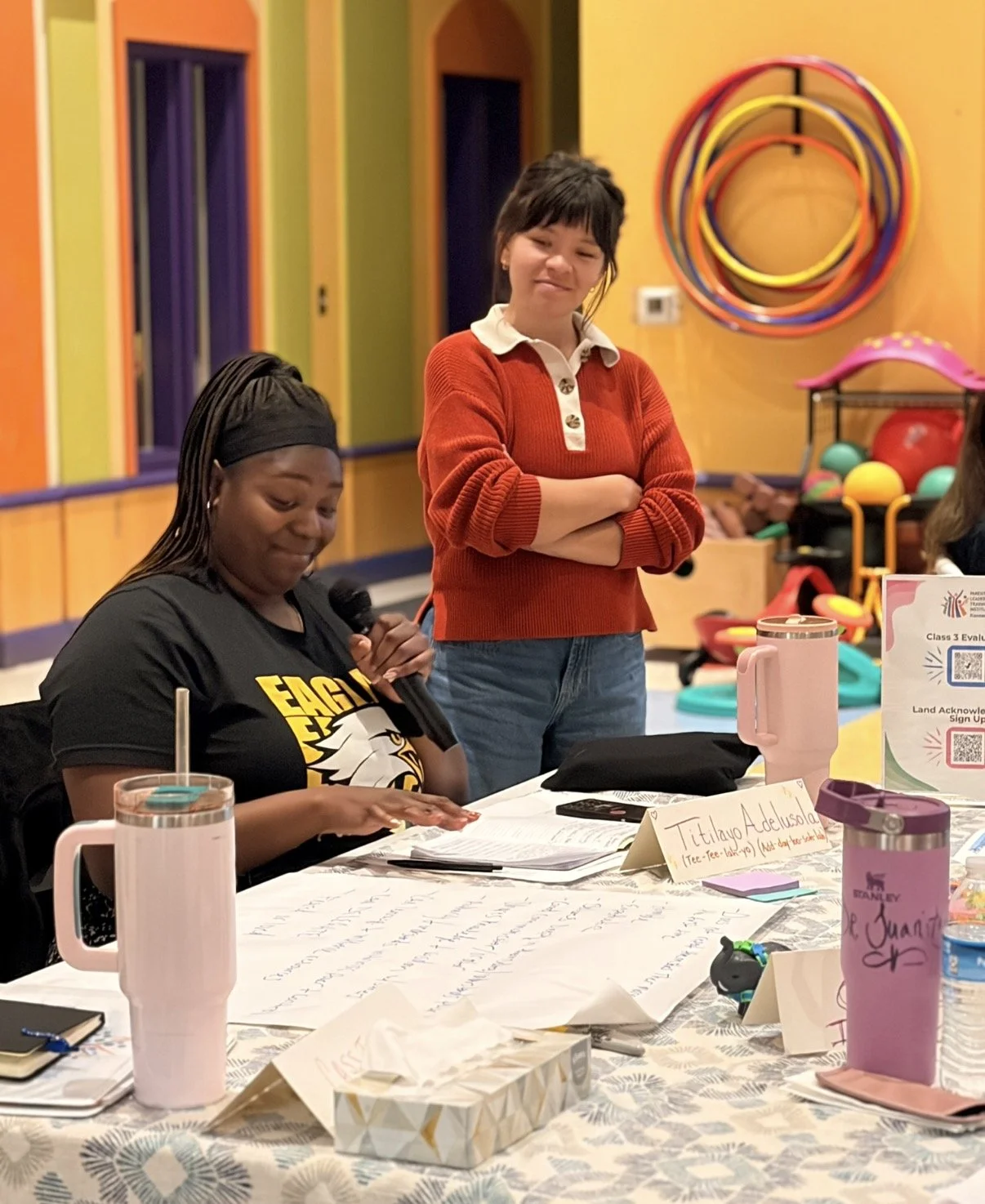
Lisa: What's a transformation that might seem small to someone on the outside but feels enormous to you?
Annie: There was one just last night at our Civic Gathering.
One of our cohort members came in with a particular idea about what networking needed to look like. They were focused on making specific connections that would help move their community project forward.
Through conversations with another cohort member and me, they began to recognize that their expectations were standing in the way of seeing what had actually happened. They had made connections and gained new perspectives that could help them think about the root of their community issue as something much bigger and more systemic.
I think it's not so much the little things as the unseen things. As facilitators, we have the privilege of noticing when people are grappling with something and supporting them through it.
But so much of the meaning-making happens between cohort members and alumni. That's where a lot of the magic happens. We're facilitators. We're not teachers, and we're not trainers. We hold the space.
PaKou: There's something incredible that happens when a parent leader realizes their idea can overlap with their capacity and the opportunity in front of them.
A lot of parents come in with very big, broad ideas. They go through a process of narrowing those ideas into something they might initially consider too small.
But sometimes that narrowing is actually where they discover their greatest impact.
It's not that they went too small. It's that they discovered the place where they have the most power.
The converse is also true. Some parents come in with very specific ideas and discover that what they're imagining could be much bigger. They might scale it, turn it into a business, or create an opportunity they never imagined.
We talk about the Japanese concept of ikigai, the intersection of purpose, meaning, work, and livelihood. The unlocking happens when someone discovers where those things meet for them. It's about helping them feel freedom in that discovery.
It's not about the scale of the idea.
Lisa: I want to talk about your relationship. Did you know each other before PLTI? How did you end up facilitating together?
Annie: I hired PaKou to be a facilitator for PLTI. I want that on the record.
When Dr. Julie Holland founded PLTI, she was still at the mayor's office, and the mayor's office couldn't house the program. I was at Turn the Page KC, leading education efforts there, and Turn the Page held PLTI in its inaugural year. We didn't have alumni yet, so we had to think carefully about the right construction of a facilitation team.
I knew PaKou personally and professionally as an incredible anti-racism trainer, and I knew those skills would benefit the team.
There were different configurations over the years, including the pandemic, when we facilitated an entire cohort virtually and then another in a hybrid environment with masks and social distancing.
PaKou and I have been facilitating together for about five years now. It feels like we've been doing it this way since the beginning, but realistically, it's a little more than half of PLTI's history.
Lisa: PaKou, what did you think of Annie when you first met her?
PaKou: I thought Annie spent a long time underselling herself.
I saw this incredible gift and talent to lead, to be bold, and to have big ideas. But she wasn't always sure whether she should take up that space. It's been a real gift to do PLTI together and watch Annie take that space and lean into what she's so gifted at.
Annie is a brilliant strategist and an incredible thinker. I don't know if our parents realize how much time and effort she puts into thinking about how to do this well—not in service to the program, but in service to our parent leaders.
There were years when I would tell Annie, "You're an organizer," and she'd say, "I don't know." Or I'd tell her she was an incredible facilitator, and she'd say she wasn't sure.
We've learned together and challenged each other. Annie is also the person who pulls me back from the edge when I'm frustrated about something.
She's the person who keeps us even-keeled. I think a lot of people don't realize that.
Annie: Our facilitation relationship mirrors the experience our parent leaders have.
We've grown together professionally, but our children have grown up, too. We exist in this space as facilitators, but also as friends and mothers, with all the ways our identities show up.
That's what our alumni experience, too. They're not just parent leaders together. They're mothers, aunties, grandparents. Their lives are happening alongside the work.
If you'd asked me five years ago about our relationship, I would have talked about PaKou's excellence, rigor, authenticity, and intentionality. But I would also have said that PaKou was my mentor, someone whose level of excellence I was striving to reach.
That's changed. We're peers now. My vision of excellence is no longer about trying to catch a baton PaKou is handing me. It's something much more collaborative, human, and holistic.
She helped me get there. I didn't get there on my own. And PLTI gave us a space to do that together.
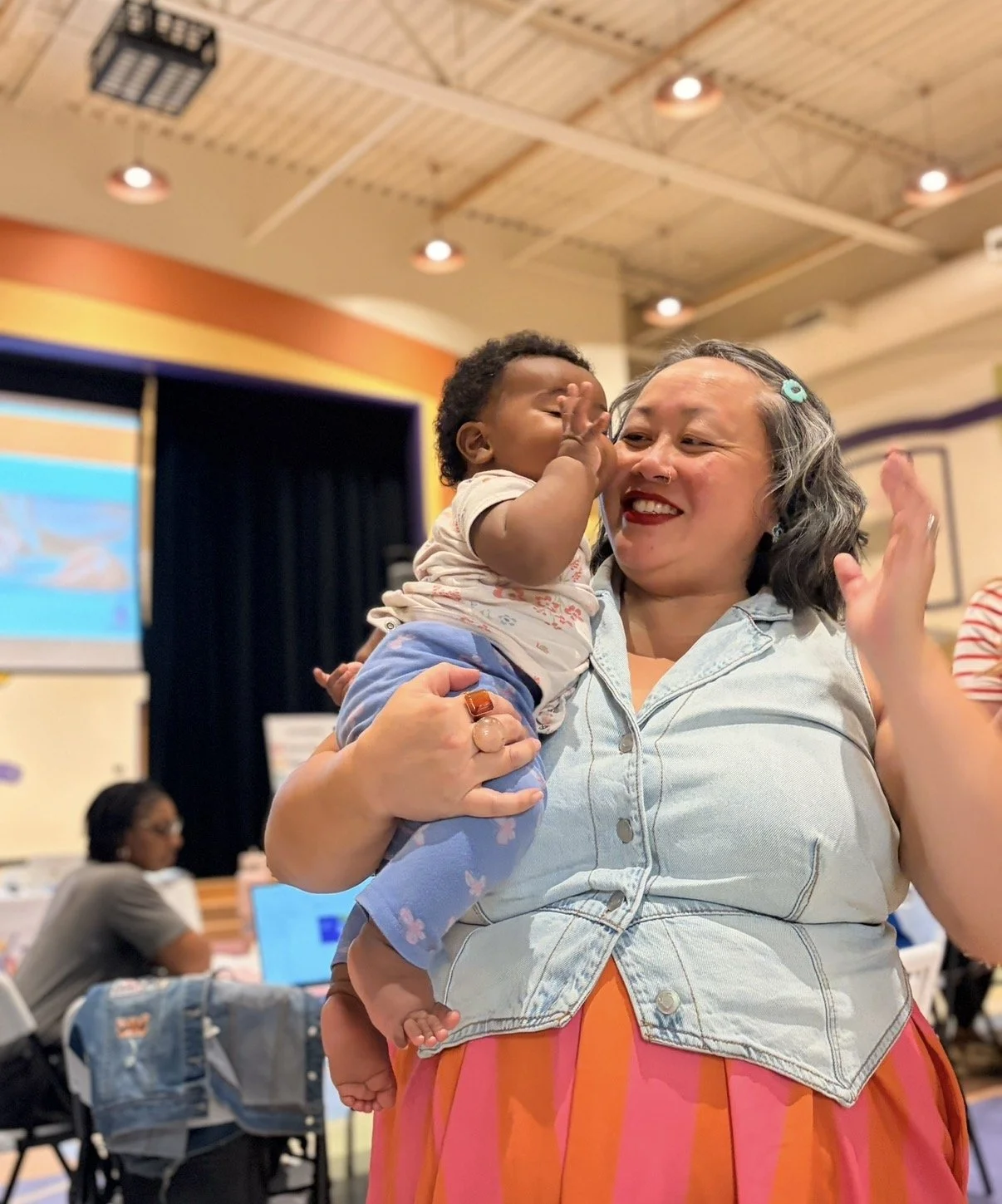
PaKou: I don't exist in many professional spaces with peers who are as committed to that kind of rigor as I am.
Annie is one of only a handful of people I know who, when I say, "There's more we could do," or "We could do this better," or "Here's an experiment I want to try," is willing to go there.
Neither of us is ever fully satisfied with what we're doing. It's exhausting sometimes. Maybe it's annoying to other people. Something could be great, and anyone outside the room would say, "That's the best ever. Don't change it." And we're already figuring out how to change it.
Sometimes it's just changing a word or a sentence. To some people that might seem ridiculous, but to us it's about making sure we're serving our community in the best way we can.
Lisa: Annie I know you have to hop off the call, but I have one final question for you both. What's one thing the other person does that drives you crazy, but that you'd secretly miss if they stopped doing it?
Annie: Something that drives me crazy about PaKou is that she's so quickly able to identify a personal, relatable story about anything and connect it deeply to whatever framework or content we're discussing. It just oozes from her. I find it deeply frustrating because it takes me so much longer to think about my own life and make those connections.
But I also benefit so greatly from whatever she's trying out or experimenting with. And if she's not in the space doing that, it's deeply missed—not only by me, but by everybody else in the room.
Annie signed off, leaving PaKou and me on the call for a few more minutes.
Lisa: Okay, now it's your turn. What's Annie's most annoying quality?
PaKou: Annie is the ultimate technician.
She can count the minutes for everything. She can accurately estimate how long things will take. She'll run through an agenda and rewrite the whole thing. Her brain is incredible in that way.
And it's so annoying because my brain doesn't necessarily work that way.
She'll do this amazing job on her sections of the facilitator guide, and then I have to do that, too. We can't have one section that's beautifully built out and another that's basically, "I don't know, just loosely do this, and you have ten minutes."
She's meticulous about the things people might consider minutiae, like editing slides and making sure everything is technically correct.
There's nothing I hate more than realizing I missed a slide deck update and Annie's slides are all beautiful and perfect. And I would really miss it because Annie makes me better. She makes me a better technician. She makes me live up to that standard. But also, can't you just mess up some slides sometimes? She almost never does.
Lisa: Before Annie left, she talked about how she used to see you as her mentor. Did you know she thought of you that way?
PaKou: Yes. She's talked about me as her teacher and mentor, and I've always told her, "The goal is not for you to be me."
She used to say, "You're the organizer. I want to be like you when I grow up."
And I actually told her to stop saying that. Because she is who she is. She has all the capacity and brilliance she needs. I didn't want her to try to be me. I wanted to help her be who she already was.
We are two Asian American women trying to do this work in Kansas City, and that's a big deal. I needed us to be peers.
There have been times when I've struggled with things related to my own racial experience, including challenges around what it means to be an Asian American facilitator in this program. Annie has been a really important person for me in that respect.
It was never about being her mentor or an elder to her. I needed her to be a peer to me as much as I needed her to be her own person in her leadership.
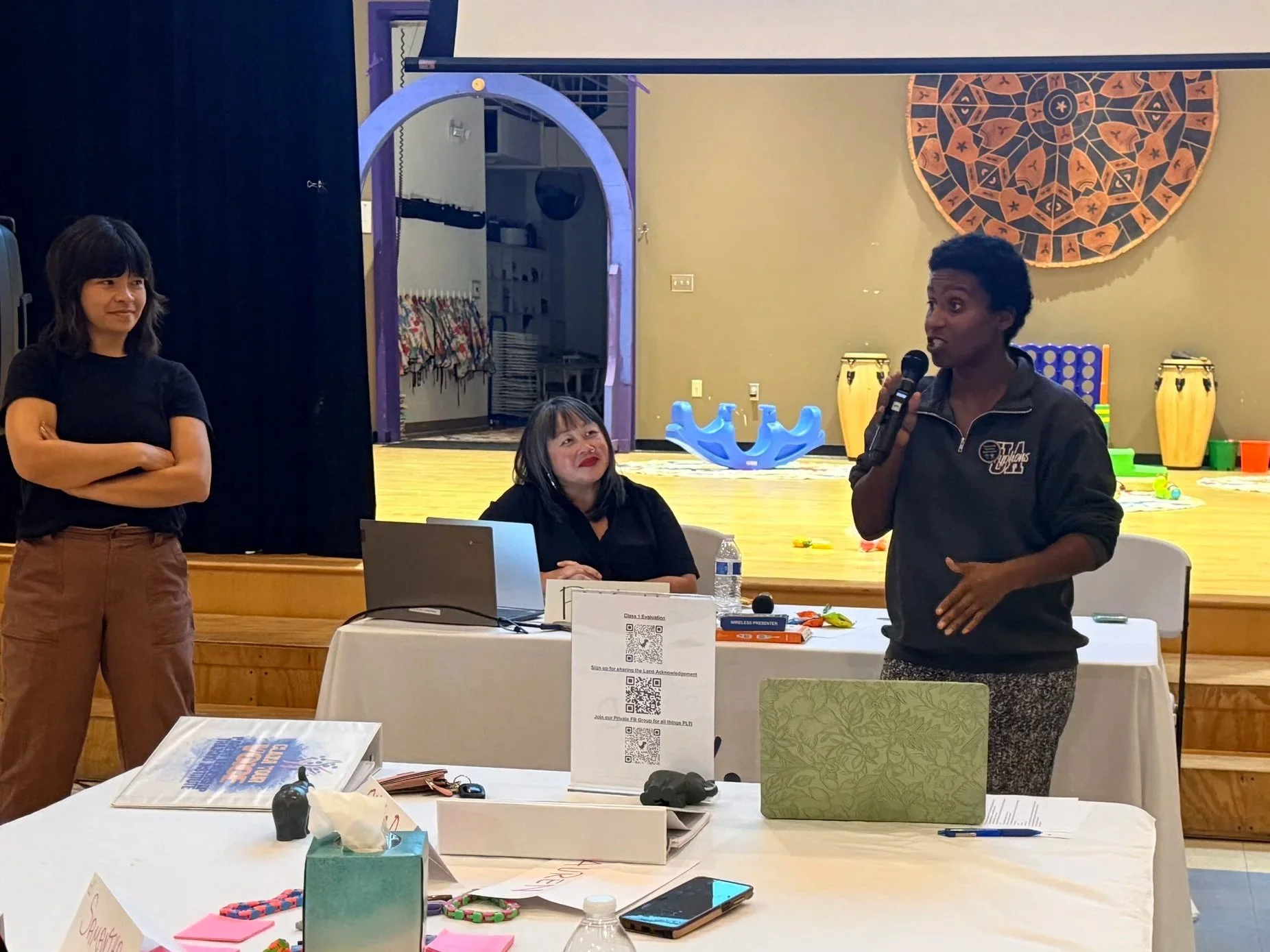
There's something especially fitting about two people who have spent years helping others recognize their own leadership discovering, in the process, new ways to recognize each other's.
Annie and PaKou describe PLTI as a place where people learn to see themselves differently. Where a big idea can become something tangible. Where vulnerability can open the door to possibility. Where the person who walks into the room is not necessarily the person who leaves it, parent leaders and facilitators alike.
And I think that's what those classroom walls would tell us, after all: Nobody leaves quite the same as they arrived.
